

Two executives have already left, cofounder Toby Pohlen lasted just 16 days running it, and a 600-contractor data center effort has been paused
The xAI Macrohard project stalls just months after Elon Musk unveiled it as one of the company’s most ambitious bets, with leadership turnover and a paused infrastructure buildout now clouding its future, according to people familiar with the matter cited by Business Insider.
What Was the xAI Macrohard Project Supposed to Be?
Musk first announced Macrohard in August, describing it as a tongue-in-cheek jab at Microsoft. The idea was straightforward on paper: since software companies don’t manufacture physical products, an AI system should in theory be able to simulate an entire white-collar software company end to end. Macrohard quickly became one of xAI’s flagship efforts, ranking alongside Grok Code and Grok Imagine as a core priority for the company.
That ambition hasn’t translated into steady progress. The project has cycled through multiple leaders and struggled to scale its team, and a data center buildout tied to the effort — involving roughly 600 contractors — has reportedly been paused. It’s a stumble that echoes broader industry jitters we covered in our piece on why AI agent adoption keeps stalling across the sector, not just at xAI.
Why the xAI Macrohard Project Stalls: A Revolving Door at the Top
The leadership churn has been especially disruptive. Two Macrohard executives left the company in February, and Musk subsequently tapped xAI cofounder Toby Pohlen to take over the project during an all-hands meeting. Pohlen lasted just 16 days before announcing his own exit, after facing pressure over the project’s pace even as Musk had voiced his own frustration with its progress in the months prior. Roughly two dozen engineers who had been tied to Macrohard have since left xAI entirely or been reassigned to other teams.
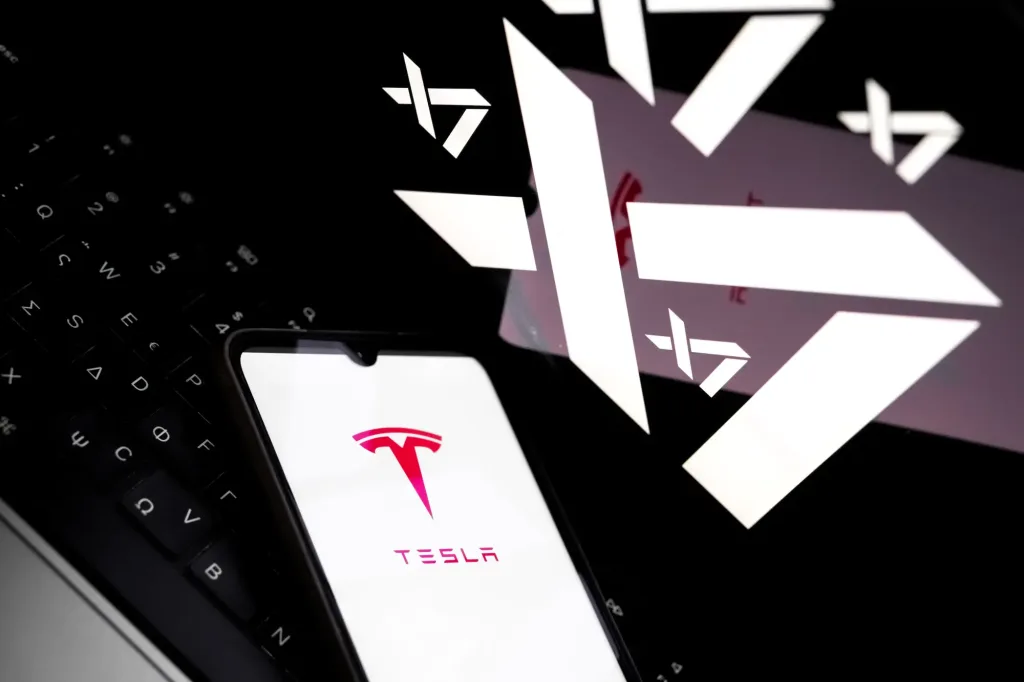
Musk did push back on the framing of the story, posting on social platform X hours after the report that Macrohard — or its apparent rebrand, “Digital Optimus” — is a joint effort between xAI and Tesla, tied to Tesla’s investment agreement with xAI. Neither Musk nor representatives for xAI or Tesla responded to requests for comment from reporters.
Tesla Steps In as xAI Macrohard Project Stalls Further
While Macrohard has stumbled, Tesla appears to be picking up some of the slack. Workers say Tesla has been ramping up its own AI agent initiative, dubbed Digital Optimus, aimed at building a system that can autonomously operate a computer by continuously processing data streams. Some of the compute resources originally allocated to Macrohard have reportedly been redirected to Tesla’s Autopilot team — a sign of how closely the two Musk-run companies’ AI ambitions are becoming intertwined.
The stumble also comes at a turbulent moment for xAI more broadly. Just a month after SpaceX acquired the AI startup in one of the largest mergers of its kind, Musk acknowledged that xAI “wasn’t built right” and said he was rebuilding the company following a wave of cofounder and engineer departures. That instability sits in contrast to the more consistent product cadence we’ve tracked from rivals — see our coverage of the increasingly heated China AI model race between Alibaba and DeepSeek — and raises questions about whether xAI can keep pace with competitors on agentic AI specifically.
Why the xAI Macrohard Stall Matters
Macrohard’s struggles are a reminder that ambitious “AI agent replaces an entire company function” pitches are proving far harder to execute than to announce, even for one of the best-funded labs in the industry. As AI companies race to ship autonomous agents capable of real work — a trend we’ve followed closely in our reporting on safety risks tied to fast-moving AI agent testing — xAI’s stumble suggests that leadership stability and clear technical direction may matter just as much as raw compute and ambition.


Please log in to leave a comment.