




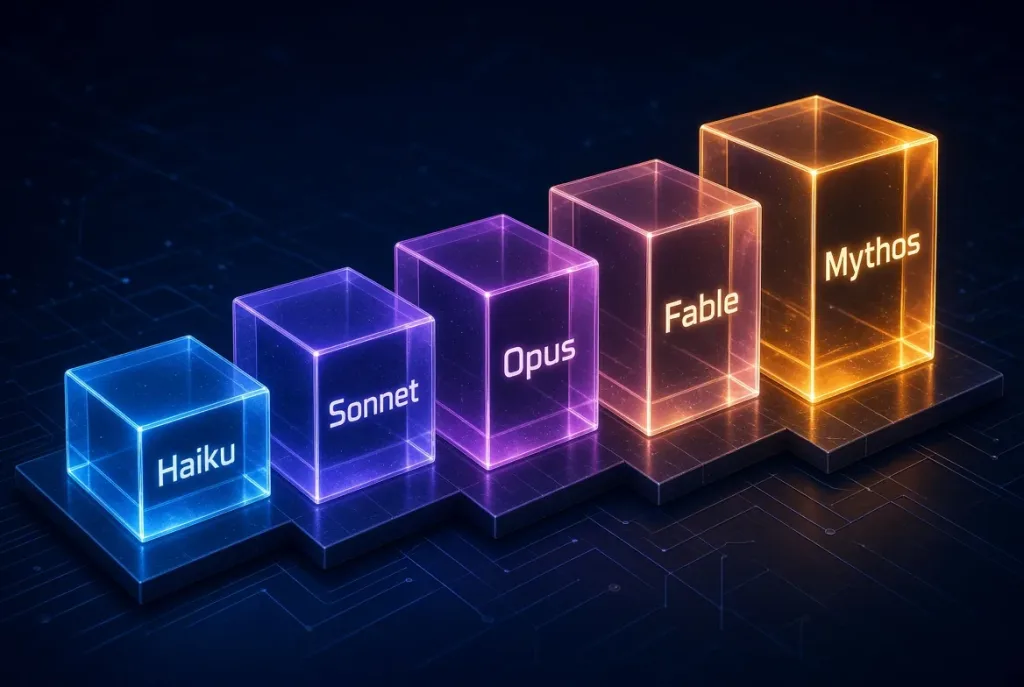
If you’ve opened Claude recently and seen a model picker with names like Haiku, Sonnet, Opus, Fable, and Mythos, you’re not alone in finding it confusing. Anthropic now ships several Claude AI models, each built for a different balance of speed, cost, and raw capability. This guide walks through where these models came from, what separates them, and which one actually fits your task. For background on the company itself, see our deep dive on Anthropic’s company history and funding, and for a look at how the newest frontier model has already made headlines, check out our report on fake Anthropic Mythos profiles used in a GitHub deception attempt.
A Quick History of Claude AI Models
Anthropic’s model lineup didn’t start out complicated. Here’s how it evolved, based on Anthropic’s own release announcements and the Wikipedia timeline for Claude:
- March 2023 — Claude 1, Anthropic’s first publicly available model.
- July 2023 — Claude 2, followed by Claude 2.1 later that year.
- March 2024 — Claude 3 launches as a family for the first time, introducing the now-familiar Haiku, Sonnet, and Opus tiers in ascending order of capability.
- June 2024 — Claude 3.5 Sonnet ships, followed later by Claude 3.5 Haiku.
- February 2025 — Claude 3.7 Sonnet introduces adjustable reasoning depth.
- May 2025 onward — The Claude 4 family arrives, with Opus and Sonnet 4, later refined into 4.1, 4.5, and Opus 4.8.
- April 2026 — Anthropic previews Mythos, a new frontier-class model, through a restricted program called Project Glasswing, citing cybersecurity risk.
- June 9, 2026 — Claude Fable 5 launches as the first publicly available Mythos-class model, alongside a more capable but access-restricted Claude Mythos 5.
- June 30, 2026 — Claude Sonnet 5 arrives, becoming the new default model for Free and Pro users.
- July 24, 2026 — Claude Opus 5 launches, closing much of the gap with Fable 5 at roughly half the price.
That’s nine major model families in under four years — a pace few AI labs have matched.
The Current Claude AI Models Lineup (2026)
As of August 2026, Anthropic’s Claude AI models break into five tiers:
| Model | Best for | Price (input/output per million tokens) |
|---|---|---|
| Claude Haiku 4.5 | Speed, high-volume, low-cost tasks | $1 / $5 |
| Claude Sonnet 5 | Everyday work, coding, agentic tasks | $2 / $10 |
| Claude Opus 5 | Complex agentic work, enterprise use, science | $5 / $25 |
| Claude Fable 5 | Frontier-level reasoning, long-running autonomous agents | $10 / $50 |
| Claude Mythos 5 | Same capability as Fable 5, restricted to approved partners | Not publicly priced |
Key Differences Between Claude AI Models
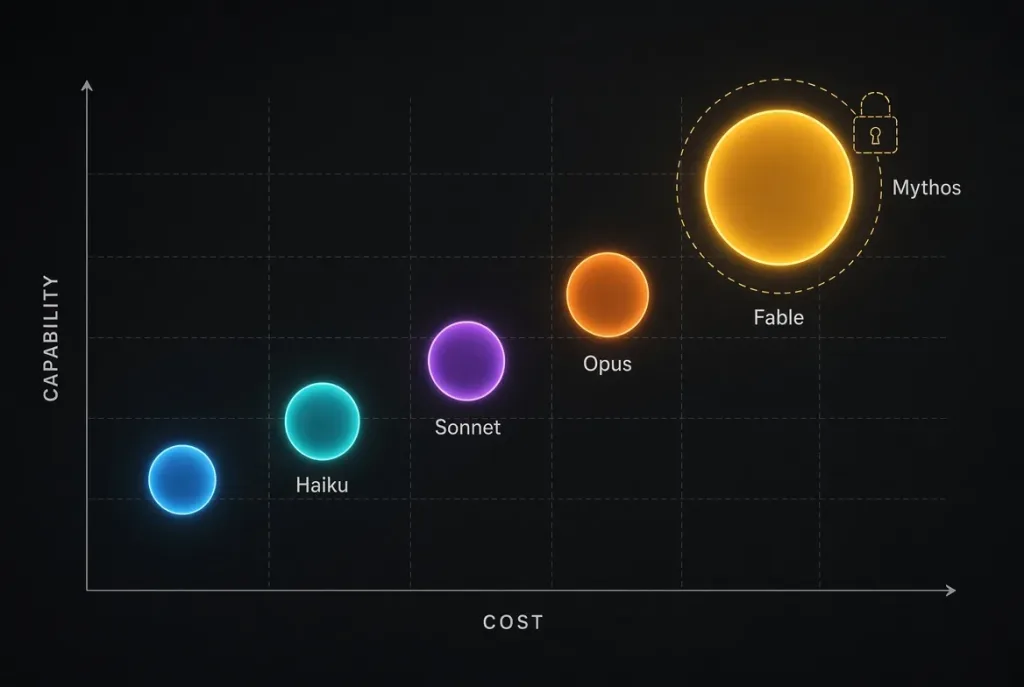
The differences among these Claude AI models come down to three trade-offs: speed, cost, and reasoning depth.
Claude Haiku 4.5 is built to respond fast and cheap. It’s the model behind chatbots, customer support tools, and any workflow processing huge volumes of simple requests where latency matters more than depth of reasoning.
Claude Sonnet 5 is Anthropic’s daily-driver model. It became the default for Free and Pro users on claude.ai in mid-2026 because it now performs close to the older Opus 4.8 tier while costing far less (Anthropic — Introducing Claude Sonnet 5). It handles coding, research, writing, and multi-step agent tasks like browsing and using tools with minimal supervision, a shift TechCrunch described as part of a broader industry push toward cheaper, more agentic models.
Claude Opus 5 targets harder, longer tasks — think large codebase refactors, financial modeling, or scientific research. Anthropic has called it the most aligned Opus release yet and positions it as the everyday model for enterprises and developers who need more headroom than Sonnet offers, without paying frontier-tier prices (Anthropic — Introducing Claude Opus 5).
Claude Fable 5 sits above Opus as Anthropic’s most capable generally available model. It’s aimed at long-running autonomous agents and the hardest reasoning, coding, and scientific workloads, where cost is a secondary concern next to getting the task right.
Claude Mythos 5 shares Fable 5’s underlying capabilities but skips its safety classifiers, making it more capable in narrow domains like cybersecurity research. Because of that, it’s only available to vetted organizations through Anthropic’s Project Glasswing program rather than the general public.
What Each of These Claude AI Models Is Actually Used For
- Customer support bots, content moderation, simple data extraction → Haiku 4.5
- Software development, everyday writing, research assistants, most business automation → Sonnet 5
- Enterprise workflows, complex agentic coding, scientific research, financial analysis → Opus 5
- Long-horizon autonomous agents, the hardest coding and reasoning problems, cutting-edge scientific work → Fable 5
- Defensive cybersecurity research inside approved partner organizations → Mythos 5
For most individuals and small teams, Sonnet 5 covers the vast majority of use cases. Opus 5 becomes worth the extra cost once a task genuinely requires deeper reasoning or longer autonomous runs, and Fable 5 is reserved for situations where only frontier-level capability will do.
Claude Fable 5 and Mythos 5: Anthropic’s Frontier Tier Explained
Fable 5 and Mythos 5 deserve special mention because of how they arrived. Anthropic first previewed Mythos in April 2026, but held back general release, warning that its cybersecurity capabilities posed real-world risk if broadly accessible. Only a small number of trusted partners, through Project Glasswing, got early access, as TechCrunch reported at the time of the Fable 5 launch.
By June, Anthropic decided the underlying model was too valuable to keep locked away entirely. According to Anthropic’s own announcement, it released Fable 5, a version of the same model wrapped in safety classifiers that block responses in high-risk areas like cybersecurity, biology, and chemistry — falling back to Opus 4.8 when a request crosses that line. Mythos 5, without those same restrictions, stayed limited to Project Glasswing partners for defensive security work.
Just days after launch, U.S. export-control rules briefly forced Anthropic to suspend both models entirely; access was restored on July 1, 2026, once the controls were lifted, as Anthropic detailed in a follow-up post on redeploying Fable 5. It’s a reminder that at the frontier of AI capability, the models themselves aren’t the only thing evolving quickly — the rules around who gets to use them are moving just as fast.
Which of These Claude AI Models Should You Actually Use?
If you’re unsure where to start: default to Sonnet 5 for nearly everything. Step up to Opus 5 when a task clearly needs more depth than Sonnet delivers — long codebases, layered financial models, or research that requires sustained reasoning. Fable 5 is worth its price only for the small slice of work where frontier capability genuinely changes the outcome, and Mythos 5 isn’t something most readers will ever need to think about unless their organization works directly in cybersecurity defense.
Curious how these models stack up against ChatGPT or Gemini? Let us know in the comments what comparison you’d like to see next, and subscribe to OpenPress.Tech for more AI breakdowns.


Please log in to leave a comment.