
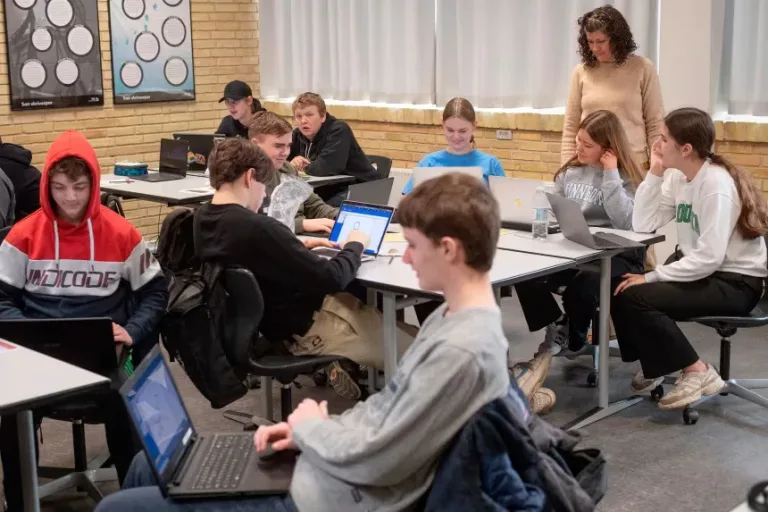


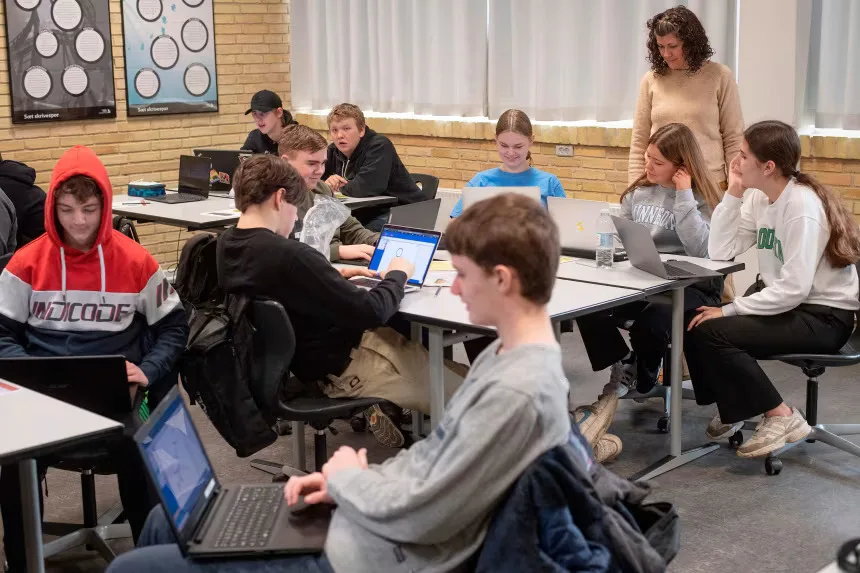
Denmark AI cheating measures are making headlines as European schools take a bold stand against academic dishonesty. With the rapid rise of ChatGPT and other generative AI tools, educators are scrambling to preserve integrity across classrooms.
This proactive approach marks a significant shift in how institutions handle digital plagiarism. As students increasingly rely on large language models to generate essays, the line between genuine learning and technological shortcuts has blurred.
The Rise of Denmark AI Cheating Measures
As artificial intelligence becomes deeply embedded in everyday apps, distinguishing between student work and machine-generated text is increasingly difficult. The new Denmark AI cheating measures aim to tackle this exact problem head-on.
Instead of relying solely on flawed AI detection software, Danish educators are redesigning their curricula. They are shifting toward oral exams, in-class writing, and interactive assessments. This ensures that students actually comprehend the material rather than simply prompting an AI to do the heavy lifting.
How Denmark AI Cheating Measures Redefine Exams
The implementation of Denmark AI cheating measures has led to a complete overhaul of traditional testing. Teachers are now focusing on the process of learning rather than just the final output.
[Image: A teacher grading physical essays and conducting an oral exam. Alt text: Denmark AI cheating measures]
By evaluating students in person, educators can assess critical thinking and problem-solving skills in real time. This pivot is crucial, especially since recent reports indicate that AI Agent Adoption Stalls when users cannot trust the system’s outputs or ethical boundaries. Schools are realizing that fostering genuine human intellect is far more valuable than producing perfect, machine-written papers.
Furthermore, as AI tools evolve, the security of these educational platforms remains a top priority. A recent, shocking LLM security vulnerability proved that AI systems can be manipulated by bad actors. This makes the Danish approach of reducing screen-based testing even more appealing to cybersecurity experts who worry about data breaches in educational software.
Broader Implications for European Education
The success of these policies could inspire other nations to follow suit. If these strategies work, they could easily become the gold standard for tech trends 2026 and beyond. Governments across Europe are closely monitoring the situation, hoping to implement similar frameworks that protect academic integrity without stifling technological advancement.
The physical infrastructure of schools is also adapting to these changes. Just as advanced algorithms are streamlining building projects, as seen in our coverage of generative AI in construction, educational institutions are redesigning physical spaces to accommodate oral exams and secure testing environments. New classrooms are being built with acoustics and layouts specifically designed for verbal assessments.
The transition has not been without its challenges. Teachers require additional training to conduct oral evaluations effectively, and the grading process has become more time-consuming. However, the long-term benefits of maintaining academic honesty far outweigh these initial logistical hurdles. Students are also reporting a deeper understanding of their subjects when forced to engage without digital aids.
For more details on the original story, you can read the full report from CNN on European schools fighting AI plagiarism.
Ultimately, these steps prove that human intellect cannot be easily replaced. By adapting to the AI era, educators are securing the future of authentic learning.

Please log in to leave a comment.