




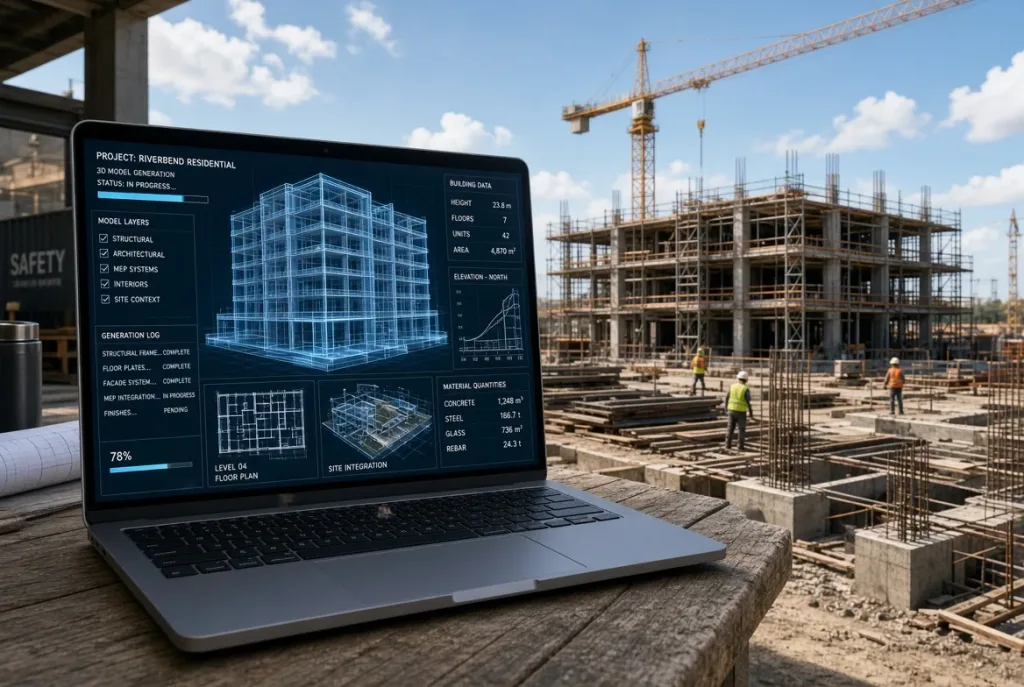
Generative AI in construction is rapidly reshaping how we design, plan, and build infrastructure. By leveraging advanced machine learning algorithms, the industry is experiencing a massive shift toward efficiency and innovation.
The Role of Generative AI in Construction
Historically, the building sector has been slow to adopt new technologies. However, the integration of generative AI in construction has accelerated rapidly in recent years.
By using advanced AI tools, engineers and architects can input specific parameters. These include materials, budget, and spatial constraints. The system then generates optimal building models instantly.
This approach relies heavily on deep learning techniques. It drastically reduces human error and saves countless hours of manual drafting. This represents a major research breakthrough in engineering workflows.
Generative AI in Construction: Key Applications
Optimizing Architectural Design
One of the most impactful uses of this technology is found in the design phase. Algorithms can instantly produce hundreds of design variations based on specific environmental data and client needs.
This capability allows architects to choose the most sustainable and efficient layouts. By automating repetitive design tasks, professionals can focus on higher-level creative problem-solving.
However, as AI tools become more prevalent, companies must remain vigilant about data protection. A recent report on an LLM Security Vulnerability highlights the risks of deploying untested AI models in critical infrastructure.
Streamlining Project Management
Beyond design, these predictive models play a vital role in project management and on-site execution. Predictive AI can foresee potential supply chain bottlenecks and optimize complex work schedules.
[Image: An engineer reviewing holographic building models projected from a tablet. Alt text: generative AI in construction]
This ensures that labor and materials are allocated perfectly, keeping projects on track and under budget.
Interestingly, while AI transforms physical industries, digital adoption sometimes faces hurdles. For instance, AI Agent Adoption Stalls in certain tech sectors due to integration challenges. The construction industry must learn from these pitfalls to ensure smooth AI implementation.
External Resources and Industry Standards
To understand the broader impact of these tools, check out this comprehensive guide by McKinsey on AI in construction. It provides excellent DoFollow insights into industry adoption rates and future forecasts.
Conclusion
Ultimately, generative AI in construction represents a major leap forward for the industry. As we look toward tech trends 2026, the reliance on smart algorithms will only grow.
Embracing these innovations ensures a safer, faster, and more cost-effective building process. The future of urban development is here, powered by artificial intelligence and robotics.



Please log in to leave a comment.